39 Second Street
Presque Isle, Maine 04769
(207) 764-2571
www.presqueisle.lib.me.us

E-mail: turnermemoriallibrary@gmail.com

Friday, January 27, 2012

Axis 360 Ebooks Just for Our Patrons

In 2011, library card holders from Mark & Emily Turner Memorial Library downloaded 1,049 ebooks from Maine InfoNet. InfoNet is the statewide consortium of Maine libraries who have entered into an agreement to share access to library ebooks through Overdrive, the vendor who supplies the access to these books. Rarely a day goes by in the typical public library now when a question about accessing library books on an ereader does not come up. Demand for library ebooks is on the rise: December of 2011 was the highest month for number of downloads and number of new patrons registered to download - not just at Mark & Emily Turner Memorial Library, but statewide. In fact, the statewide registration of new ebook patrons was up 60% over the next highest month of November. Patrons of Turner Memorial Library want access to ebooks, but because the demand is so high statewide, they often have to wait for the books they want to become available. In response to this demand, we are now pleased to be able to offer ebooks
purchased and available especially and uniquely for patrons of Mark & Emily Turner Memorial Library. Axis 360 is a program that will allow our staff to purchase ebooks based on our patrons’ needs and wants, add them to our own library catalog, and cut down the wait times for our patrons for library ebooks. Our library ebooks can be viewed two ways: Through a link on our website to a “wall” of books that looks very much like browsing a traditional bookshelf, and through our library catalog in the same way as any other book. These books are viewed on a
free reader app called Blio, which displays the books in the same beautiful way that the writer and publisher intended, and which is the first reader app to be 100% compliant with the Americans with Disabilities Act (ADA). These books will currently run on any Windows PC
and on iOS and Android mobile devices. Axis 360 will soon be available for Nook, Kobo, Sony, Mac desktops, WebOS, and they are in talks with Amazon for Kindle compatibility. Meanwhile, Turner Memorial Library will continue its membership with InfoNet to allow our patrons with Kindles ongoing access to library ebooks. The landscape of publishing and books is changing rapidly, and new developments arise almost daily. The library staff are working to ensure
that our patrons maintain access to as many items as possible in the ways that are most convenient to those patrons.

To access our "Magic Wall" of ebooks, go to http://pimelib.axis360.baker-taylor.com/default.aspx . You will need a library card, a Blio account (free) & the Blio reader app (also free). To begin downloading these ebooks, first sign up for a free Blio account at www.blio.com.

Next, download the free Blio app to your iOs, Android, or Windows PC device. Third, make sure you have a Mark & Emily Turner Memorial Library library card. Then, visit our Magic Wall of library ebooks above. When you check out an ebook, you will be asked to enter your library barcode number and a five-digit PIN of your choosing. If you are a first time visitor to the Wall, it will ask you to create a free account, which will include your email address, a username of your choosing, and the PIN of your choosing. PLEASE NOTE that when you enter your library barcode number, you MUST put five zeros at the beginning. For example, a library barcode of xxxx would be typed in as 00000xxxx. When you check out your ebook, you will be asked to
enter your Blio account login (email and password to your Blio account). Your ebooks are sent to your Blio reader app, and the books will load into your Blio library the next time you open it. PLEASE NOTE that Baker & Taylor is working to make these books available for iMac, WebOS,
NOOK, Sony, Kobo, and Kindle. Users of these devices may still download ebooks from Maine InfoNet.

If you have questions about our ebooks and your devices, please call (207) 764-2571 during business hours or contact us any time via Facebook under Presque Isle Librarians or by emailing lisanealshaw@presqueislelibrary.org, diannaleighton@presqueislelibrary.org, or pimelibrarian@gmail.com.

Wednesday, December 7, 2011

An Author You Can't Refuse

“Inmates are free to roam the prison [at Otisville], but aren’t allowed to enter other housing units. Otherwise, a con can slip into a unit, pipe someone over the head, and split.

When Christmas came around, the Italians needed a hack to look the other way while we all snuck into one unit to get together for dinner. Everyone knew I g
ot along with Officer Hardy.

‘See if he’ll let us do Christmas dinner by you,’ said Gussy.

By now, I did my own thing, kept some distance from the Mob. But these were good guys who looked after me when I arrived.

I talked to Hardy.

‘Okay, Ferrante, but not too many guys, I don’t need a problem.’

On Christmas Day, we took over the rec room in my unit. We pushed together the Ping-Pong tables and threw sheets over them for tablecloths.

Earlier in the week, Patty Paresi stole two buckets from the paint shop. With a homemade heating rod called a ‘stinger,’ we boiled five pounds of macaroni in one bucket, a fish sauce in the other. Ralphy the Bandit made garlic bread and caponata. We even had a plate of finocchio and olive oil.

I gave Hardy A Christmas Carol by Charles Dickens. His nose was an inch off the page as a dozen Italians from other units trickled in during the 6:00 p.m. move.”

Unlocked: A Journey from Prison to Proust is the autobiography of Louis Ferrante, a former loanshark and soldier in the Gambino crime family, at
that time under the leadership of the late John Gotti. Lou’s story is remarkable for many reasons, from the hair-raising stories of life on the street - told with a mix of gritty detail and warm humor - to the evolution of his writing and diction itself throughout the book. But like a Godfather version of Pilgrim’s Progress, Lou encounters as diverse and colorful an array of friends and acquaintances who would all play some part in setting his life course from the City of Destruction through the Valley of of the Shadow of Death and on into the Celestial City, to redemption and a life that motivates, encourages and saves through the most valuable commodity he had ever touched.
  • Sonny, the Colombo family geisha house owner who ran a fraudulent credit scam from under his wig ( a federal crime);
  • The prison guards who tossed him in the hole after an apple throwing incident and gave him time to think about his life and develop the urge to read;
  • Fat George, who “had half the Bible tattooed on his body” and access to some books;
  • “The broad at the bookstore”;
  • Fred, the “small balding man with a fast walk, like a white George Jefferson” who headed the Education Department at Lewisburg [federal prison];
  • Jimmy, former head of the notorious Westies Irish mob out of Hell’s Kitchen, once described as a “sadistic thug” renowned for dismembering his hits post-mortem who thought Lou was being wasted working in the kitchen at Lewisburg and “pulled some strings”: “I got you a job at Education,” he said. “Now you can read all you want”; and
  • Richard Messina, corporate attorney and convict whom Lou first encountered in the yard reading A. Scott Berg’s Lindbergh
These are just some of the unlikely people who pulled Lou out of the swamp of street crime to the socially esteemed roles of educator, writer and academic. And it started not with stolen electronics, cash, drugs, leather coats or cars - it started with books. These are the first three books Lou was handed in prison:

Napoleon
- Vincent Cronin


Mein Kampf


Caesar's Gallic Wars


"Get them books yet?" [Fat George] asked.


"Yeah, who picked 'em
?"

"The broad at the store."

"Whaddyu tell 'er?"

"That you were short and bossy."

Louis Ferrante went on to tutor fellow inmates in Shakespeare, world history and literature. He served an eight-years sentence, and has since left both prison and the Mafia life. He is now an author, motivational speaker, and has appeared on The Daily Show. Lou has also published Mob Rules: What the Mafia Can Teach the Legitimate Businessman.
Louis sends along these personal recommendations for our library readers:

Les Miserables by Victor Hugo

The Count of Monte-Cristo by Alexandre Dumas

Anna Karenin
a by Leo Tolstoy

A Tale of Two Cities by Charles Dickens

The Story of My Life by Helen Keller

Nelson Mandela: The Struggle is
My Life

A Testament of Hope: The Essential Writings of Martin Luther King

The Autobiography of Benvenuto Cellini


Author Louis Ferrante (image used with permission)

Thursday, July 14, 2011

Reading Recommendations from Melanie

Melanie’s Recommended Books


Tremendous thanks to library volunteer Melanie for her book recommendations. One of the many great things about our library volunteers is that they each bring a unique set of experiences, tastes and interests that patrons and staff alike can draw on for an expert opinion. Melanie's husband is a tattoo artist and she herself is an amazing work of art. If you're looking for something interesting to read this summer, take a look at Melanie's outstanding suggestions below.


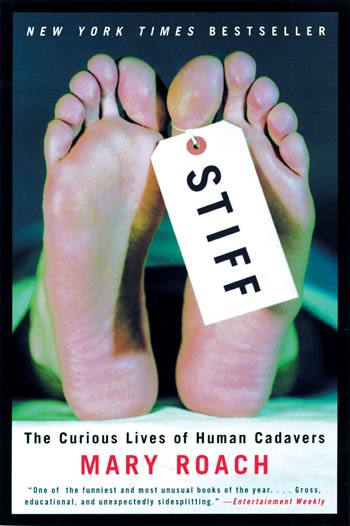
Stiff by Mary Roach


Down East Detective by Karen Lemke

Deviant
by Harold Schechter

Delores Claiborne, The Girl Who Loved Tom Gordon,

and The Long Walk by Stephen King


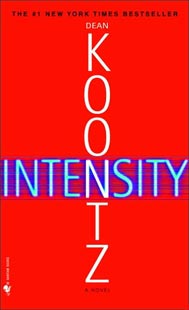
Intensity and Fear Nothing by Dean Koontz

Rumble Fish and The Outsiders by S.E. Hinton

Tales of a Fourth Grade Nothing and Superfudge by Judy Blume

The Lion, the Witch and the Wardrobe by C.S. Lewis

Flowers in the Attic by V.C. Andrews

Go Ask Alice by Anonymous

Where the Sidewalk Ends by Shel Silverstein

Lost on a Mountain in Maine by Joseph B. Egan

New York City Tattoo: The Oral History of an Urban Art

by Michael McCabe


Wednesday, April 27, 2011

Overdrive Update for Library Books on Kindle

Overdrive has notified libraries of the following information regarding the imminent availability of Kindle-compatible e-books through libraries, and we are in turn passing this information on to you:

"Many of you will receive inquiries about this new program, so here is a brief introduction to what can be expected when this launches:
  • The Kindle Library Lending program will integrate into your existing OverDrive-powered 'Virtual Branch' website.
  • Your existing collection of downloadable eBooks will be available to Kindle customers. As you add new eBooks to your collection, those titles will also be available for lending to Kindle and Kindle reading apps. Your library will NOT need to purchase any additional units or formats to have Kindle compatibility. This will work for your existing eBook titles.
  • A user will be able to browse for titles on any desktop or mobile operating system, check out a title with a library card, and then select Kindle as the delivery destination. The borrowed title can then be enjoyed using any Kindle device and all of Amazon's free Kindle reading apps.
  • The Kindle eBook titles borrowed from a library will carry the same rules and policies as all our other eBooks.
  • The Kindle Library Lending program will support publishers' existing lending models.
  • Your users' confidential information will be protected.
  • The Kindle Library Lending program is only available for libraries, schools, and colleges in the United States."
Thank you to Overdrive, Amazon, and everyone who has made this possible - most particularly YOU the library patron.

For any questions about library e-books and e-readers, please feel free to contact staff at Mark & Emily Turner Memorial Library in Presque Isle, Maine. Our full ist of contact information is here:


Tuesday, April 26, 2011

A Book by Any Other Format ...

“You can’t judge a book by its proprietary format.” “I can read you like an enhanced font ePub download.” Since these phrases haven’t quite made it into daily vernacular - yet (but you read them here first if they do!), we can safely assume that for the time being, books in the bound-paper manifestation so many of us love have not yet been blown into extinction like dinosaurs after an asteroid by digital books and e-readers. Libraries still enjoy enormous requests for and circulation of traditional books.


In fact, according to a recent article in “Scientific American” by David Pogue, digital preservation is still far too new to be proven as a reliable method of archiving over the long term. But while archiving of material is of high import to libraries, so much more is access to material. Digital books are less about denying readers the “smell and feel” of a book and more about providing the opportunity for reader to have book in hand in the shortest amount of time possible, and many times at a lower cost. Project Gutenberg, for example, provides digital access to numerous classics and public domain works, saving readers the additional cost of needing to purchase the item and libraries the cost of acquiring multiple copies of a work that is already freely available.


What can be very intimidating for a reader is the tangled undergrowth of e-reader brands and proprietary file formats for electronic books. One thing of which we can be certain: Things will keep changing. Readers who bought and fell in love with their Amazon Kindles, for example, were dismayed to then learn that the Kindle was not compatible with the ePub format that library e-books offered by distributors such as Overdrive were using. “You mean I bought this electronic reader and now I can’t check library books out on it?” Happily, however, that is also changing, and soon library patrons will be able to check out e-books on their Kindles.


As we cut our way together through the rapidly growing and evolving flora of the publishing world, it might be helpful for patrons to have some familiarity with the developments and challenges. Patrons now have more books than ever from which to choose, but the acquisition of those books might involve more now than consulting the card catalogue and pulling the volume off the shelf. Here are just a few of the myriad ways librarians can help patrons get book in hand:


1. The library purchases the book. Librarians love to hear requests from patrons and also endeavor to follow popular authors and titles to ensure to the best of their respective budgetary abilities that patrons have access to those books.


2. The library requests use of the book from another library. Not every library has every book, but libraries are generally very good about sharing materials back and forth for the greater good of all information seekers. This is called an Inter-Library Loan (or ILL), and is a request you would generally place with your local librarian. Often a small fee or donation is requested to help cover the cost of mailing or courier services.


3. The book is available as a digital download through your library (or another free service such as Project Gutenberg), as an e-book or audio book, and can be downloaded with your patron identification number to your computer, e-reader, or other handheld device. This is where devices and formatting can get tricky, and one of the best people I have found to help organize it is “The Digital Goddess” Kim Komando. Kim discusses e-books and e-readers frequently in her column, and she has a comprehensive chart of readers and their supported formats here. Some devices such as the Kindle, Nook and iPad download books wirelessly, and there is usually an open wireless connection at your local library. Some devices must be hardwired to a computer with an accompanying account, such as Sony. It’s our business as librarians to know how to help you with this process.


4. The book is Print on Demand (also known as POD or publish on demand). This is admittedly new territory for libraries, as it indicates a book that has been written and uploaded to a publisher/distributor [such as Amazon via CreateSpace] in a digital format but is not actually available in print until it is purchased. A book in this format is unlikely to be available to acquire via an Inter-Library Loan, and might not have been formatted for all e-readers nor purchased by Overdrive. It is not completely uncharted territory for libraries, however. California libraries are working together to provide POD services to their patrons with an Espresso Book Machine. Maine is working on the same thing. Expect to see further developments in this area as more emerging authors take advantage of self-publishing services.


Whatever your reading desire or question, one thing that has not changed is your librarian’s desire to help you. Access is what we do. In fact, we wrote the book on it - in all formats.


Lisa Neal Shaw is the Reference Librarian at Mark & Emily Turner Memorial Library in Presque Isle, Maine. For questions about any of the above or any of our other services, please feel free to call (207) 764-2571 or e-mail lisanealshaw@presqueislelibrary.org.

Thursday, December 30, 2010

Future Fiction: What's Coming in 2011


Coming in 2011!

1. Fatal Error by J.A. Jance

2. Bird Cloud by Annie Proulx

3. Tick Tock by James Patterson

4. Being Polite to Hitler by Robb Forman Dew

5. The Good Daughter by Jasmin Darznik

6. Townie Andre Dubus III

7. Fadeaway Girl by Martha Grimes

8. Death of a Chimney Sweep by M.C. Beaton

9. Treachery In Dead by J.D. Robb

10. Though Not Dead by Dana Stabenow

11. The Red Garden by Alice Hoffman

12. Journal of a UFO Investigator by David Halperin

13. Deep Black: Death Wave by Stephen Coonts

14. Headhunter's Daughter by Tamar Myers

15. Shadow Fever by Karen Marie Moning


Thursday, September 16, 2010

The Public Library of 2015

"We can therefore safely speculate that by 2015, and in all probability much sooner, libraries will rise to meet the increasing provider and user-end demands for Internet access to address education and economic needs for their patronage."

Access: This is one of the first terms students of librarianship learn. Free and open access to information has been and continues to be the charge of librarians past, present and future. The degree in fact is named Library and Information Services. Librarians are looked to as stewards of information, and as the rule and law of archiving decrees, it is content and not form that drives the need for information storage. While publications in all forms seem to become easier to obtain for individuals, the ability to sift through confusing and often contradictory information - and indeed the ability to match file format to device and device to access point - is greatly challenged. Frustration mounts for those who find the rapidly changing formats incomprehensible and when even lowering costs for devices assumed to be had by the majority remain beyond the financial means of so many citizens. Technology is advancing exponentially. The economic edge will lie with those who are familiar with this technology, and conversely those who do not have access to technology, the information stored and delivered along it, and the chance to learn it, will become the most financially vulnerable.

The printing press and changes in the epistemological makeup of religions forged the way for a new reading public. In many Christian religions, only pastors and priests were trusted with the word of God. Besides, books were scarce; monks used to teach from texts chained to the lectern ( Freeman, 2009, p.31).

We hope the President [Theodore Roosevelt] will be a restraining influence on the flood of words both in correspondence and in books, but we fear the times are against him. They offer fatal facilities for verbal exuberance. Books today are published in vast numbers, less because authors have anything to say than because printing is easy and cheap and the presses have to be kept at work. ... The stenographer, the typewriter and the printing press are invaluable agents of civilization, but they have their drawbacks. They have inundated us with a plague of words ... (Freeman, 2009, pp. 52-3).

The Internet is not your library and if you thought a ton of books was an overwhelming amount of information, think again. The Internet doesnt contain just a few dozen or hundred relevant sources, no, it contains millions or billions or even more. To make things worse, there is no friendly and intelligent librarian to help you sort through all this information. Its only you and a stupid search engine (MakeUseOf.com, 2010).

Public libraries have long held to the philosophy that information and access to it are things that should be freely open to all. This is a philosophy shared not exclusively by the staff who work in public libraries but in fact by the very founders who originally saw a need for public libraries in their communities. John Cotton Dana, author of the well known A Library Primer and a gentleman as much beloved to librarians as Melvil Dewey, stated, Unfortunately, most citizens who took up the library idea thought of libraries as mere book-collections, housed in buildings designed to ornament a town. They half-unconsciously desired to put up memorials to local culture, and not to establish live institutions that would help promote much needed general intelligence (Cotton Dana, 1920, p. 3).

Today, librarians have no end of fascinating stories about patron questions received at the circulation or reference desk. Live birds are pulled from pockets with a request for the librarian to help identify the species. Play-writes telephone from their home offices wondering if somewhere there is software to help them format their opus and where it might be located. Readers of library blogs post comments inquiring about obituaries and genealogical resources. People cant find what theyre looking for on the computer, but they can find librarians.

And those are just the people with computers.

According to the U.S. Census Bureaus Current Population Survey, in rural Maine alone, of the approximately 323,000 homes surveyed, just over 25% report having no Internet use. Of the respondents who do use Internet in their homes, 21% reported that they were using a dial-up connection (NTIA/US Bureau of the Census, 2007, p. 6). At the same time, again in Maine, state government no longer routinely sends out print versions of tax forms and booklets. While they may be requested with a telephone call, the trend is toward obtaining the forms and accompanying information online. Unemployment claims are no longer provided by walk-in service in Maine. Applicants are encouraged to apply online. Online universities are a growing trend as well. One of the most readily recognized - the University of Phoenix online - reported a Fall 2000 enrollment total of 14, 783 people. By Fall of 2007, that number had increased to 224,880 (U.S. Department of Education, Institute of Education Sciences, 2009).

As of this writing, Maine libraries are in a state of positive transition to meet the need of an Internet access-challenged population with a growing government and private sector need for that access. The Maine State Library reports the following: Research by the American Library Association shows that public libraries are the sole source of no-fee access to the Internet for 73% of Americans who have no connectivity at home or work. In 2008 there were only 1,424 public access computers available in public libraries located throughout Maine. Many of those computers in the smaller libraries are from a Bill and Melinda Gates Foundation Grant awarded in 2002; some were replaced by a Gates grant in 2008-09. Seventy-five percent of the public libraries responding to a survey in 2010 reported not having enough public access computers to meet current demand. Many also reported that many of the existing public computers were too old to run current software. Over 220 public libraries connect to the Internet in Maine through the Maine School and Library Network. Beginning in July 2010 all these libraries will have at minimum a 10 mbps broadband connection (Maine State Library, 2010).

We can therefore safely speculate that by 2015, and in all probability much sooner, libraries will rise to meet the increasing provider and user-end demands for Internet access to address education and economic needs for their patronage. Much of this will continue to be accomplished by local municipal and philanthropic support and by federal and foundational grants. The technology needs in particular are addressed under the American Reinvestment and Recovery Acts Broadband Opportunities Technology Program (United States Department of Agriculture, 2010).

Currently, Maine libraries are also in the process of actively and meaningfully partnering with the Maine State Department of Labor (MDOL) and the Institute of Museum and Library Services (IMLS) to further aid citizens with the Maine Public Library Information Commons Project. This application seeks funding to equip Maine's public libraries to become information commons areas-- to serve as access points to free high speed Internet service and to provide assistance to vulnerable populations both in the use of technology and in finding and using needed information in the areas of employment, civil law, health, government services, small business information, and workforce development.

Public libraries have historically provided a gateway to information. They are perceived as safe places to go for unbiased, friendly, confidential information. As broadband is introduced into rural communities the public library is a logical place to learn to use the new medium -- seeing how social networking works, finding new information sourcesapplying for jobs on-line and trying it out before making an investment for home or business. Bringing together access to technology and access to needed information makes sense. That is the aim of the Maine Public Library Information Commons Project (Maine State Library, 2010).

As libraries become more prominent presences in economic recovery for individual citizens, it is further a reasonable expectation that libraries may pursue additional federal funding under the Workforce Investment Act of 1998. Under Title II - Adult Education and Literacy - Sec. 202, the stated Purpose reads as follows: It is the purpose of this title to create a partnership among the Federal Government, States, and localities to provide, on a voluntary basis, adult education and literacy services, in order to

(1) assist adults to become literate and obtain the knowledge

and skills necessary for employment and self-sufficiency;

(2) assist adults who are parents to obtain the educational

skills necessary to become full partners in the educational

development of their children; and

(3) assist adults in the completion of a secondary school education (U.S. Department of Labor Employment and Training Administration, 1998), pp. 125-6). Sec. 203 (5[F]) defines an Eligible Provider as a library (U.S. DOL/ETA, 1998, p. 126).

Therefore, by 2015, it is likely that libraries roles as technology access centers for economic growth will increase greatly, and the fiscal means to facilitate that are available.

And what of books, the commodity with which libraries are so readily associated? To understand where libraries will be regarding the distribution of books over the next five years, it is essential to follow what is happening in the publishing industry.

According to the International Digital Publishing Forum (IDPF) in conjunction with the Association of American Publishers (AAP), wholesale electronic book sales in 2009 reached approximately $170 million, up from an estimated $5 million in 2002. Second quarter sales alone for 2010 have reached almost $90 million - and those are just wholesale numbers. IDPF states, Retail numbers may be as much as double the above figures due to industry wholesale discounts (IDPF.org, 2010). However, sales for traditional formats of books are still very healthy according to the Association of American Publishers (AAP): Net sales of $23.9 billion were reported for 2009, a 1.8% decrease from 2008. Audio book sales were hit hardest: Audio book sales for 2009 totaled $192 million, down 12.9% on the prior year, CAGR [compound annual growth rate] for this category is still healthy at 4.3%. E-books overtook audiobooks in 2009 with sales reaching $313 million in 2009, up 176.6% (AAP, 2010).

However, Forrester Research asserts that AAP far under-reports the true size of the eBook content market. In fact, Forrester Analyst Sarah Rotman Epps writes, AAP data represents wholesale, not retail, revenue; what the retailer collects from the consumer could be more (or less) than what the retailer pays to the publisher. In addition, AAP data represents only a subset of trade eBook publishers, and it excludes major markets like education, libraries, and professional electronic sales. ... Considering the growth rate of eBook trade sales (up 176% year-to-date), we think its reasonable to project overall eBook revenue will top $500 million in the US in 2010 (Epps, 2010).

Patron requests for eBooks are on the rise. A recent announcement from Maines InfoNet Download Library service sent via email to librarians and other interested parties on Maines library listserv ME-LIBS briefly outlined plans to include eBooks along with audio books as part of the service - due to patron demand. According to early plans, The Overdrive system provides eBooks in formats that work on many but not all readers. The ePub and DRM PDF formats are supported by the Sony eReader, the B+N [Barnes & Noble] Nook, the Borders Kobo and others, as well as on windows PCs and Mac computers. The formats are not supported on Kindles. The format is not currently supported on the iPad, but Overdrive has promised an announcement on this front soon. ...

Sony already has a program in place to help librarians obtain and train on their eReaders and a system by which to lend eBooks with them (Sony, 2010). While Amazon founder Jeff Bezos generally does not release specific sales figures for Kindles, Forrester Research speculates, “B&N [Barnes & Noble] will steal market share from Amazon and Sony. 2009 was a setup year. In 2010, B&N will rack up significant sales of Nooks and eBooks, as some consumers look for an Amazon alternative. Sony will launch its own new devices, and will work on improving the software and book-buying experience. B&N will end up taking market share from both Amazon and Sony, but Amazon will retain its dominant position as market leader” (Epps, 2010).

What librarians can therefore expect to see over the next five years are shifting sands in eBook technology and availability. Formatting compatibility issues, driven largely by publisher digital rights concerns and litigation, will compel librarians to keep up with emerging trends as patron demand for eBooks grows at a faster rate than their functional comfort with the evolving technology that supports those books.

At the same time, a growing trend in the publishing industry is what is knows as vanity publishing, where writers publish their own works through an electronic book sale site such as Amazon. While purchase prices for these eBooks are generally very affordable, the electronic access gap is still too wide for many library patrons to bridge on their own. Kiosks offering print on demand (POD) services are now appearing in a wide variety of locations, including Riverside County (CA) Library System, where a Book Espresso POD machine was purchased under a $100,000 grant from the California State Library. The July 2009 grant has been used to purchase a Book Espresso print-on-demand machine which prints, covers and binds trade paperback quality books from computer files. “Library patrons will now have the option to request titles, have the book printed for free, read it and return it to the library collection, or they may choose to keep the book and pay a printing fee. If the requesting patron is at the Book Espresso location and wants to pay for the book, it can be printed immediately while they wait.

"Growing our collections based upon patron on-demand choices is a new concept for our library system, said Jan Kuebel, Manager of Grace Mellman Library. Rather than relying solely on interlibrary loan, we now have a way to immediately respond to patron requests for materials outside of our current collection.

Available book titles will be obtained from Lightning Source, with over 500,000 titles available, and Google Books, who has partnered with over 20,000 publishers to make their content available for on-demand printing (PRNewsWire, 2010).

The digital village is still in mid-construction for many media. Between now and 2015, librarians will need to keep educated and stay curious about emerging trends for the sake of the patronage who rely on them for information services and access. By doing so, the libraries of 2015 remain institutions that promote general intelligence.

Summary

In five years, the basic mission of providing access to information will not have changed for libraries. In fact, as access to economic and literacy tools becomes increasingly varied, libraries will have an ever more important role in the community as a central starting access point and for assistance navigating the sea of formats. Furthermore, libraries will become a primary point of contact for citizens whose educational and government services become digitized faster than the availability for these citizens to access them individually. More and more educational, economic, government and literary entities are dotting the digital landscape, and libraries are still the most reliable and only free public transportation on the information superhighway. Libraries strive to deliver their passengers to their five-year destination and still have ample fuel to accurately address where they - and the people they serve - will be in the following five years.

Sources

6 ways to reduce irrelevant results on Google search (2010, April 18). MakeUseOf. Retrieved from http://www.makeuseof.com/tag/6-ways-reduce-irrelevant-results-google-search/

Dana, J.C. (1920). A Library Primer. University of California: Library Bureau. Retrieved from http://books.google.com/books?id=9aG6AAAAIAAJ&printsec=frontcover&dq=John+Cotton+Dana&hl=en&ei=i_aPTNz_F8L78AaAwoyVDQ&sa=X&oi=book_result&ct=result&resnum=7&ved=0CEoQ6AEwBg#v=onepage&q&f=false

Epps, S.R. (2009, December 1). Ten eReader And eBook Predictions For 2010. Forrester Research. Retrieved from http://blogs.forrester.com/sarah_rotman_epps/09-12-01-ten_ereader_and_ebook_predictions_2010

Freeman, John (2009). The Tyranny of E-Mail. New York: Scribner.

Households using the Internet in and outside the home, by selected characteristics: Total, urban, Rural, Principal City, 2007 (2007). U.S. Census Bureau. Retrieved from http://www.ntia.doc.gov/reports/2008/Table_HouseholdInternet2007.pdf

Jordan, T. (2010, April 7). AAP Reports Book Sales Estimated at $23.9 Billion in 2009. Association of American Publishers. Retrieved from http://www.publishers.org/main/IndustryStats/indStats_02.htm

Maine State Library and the American Recovery and Reinvestment Act (ARRA) (2010). Maine State Library. Retrieved from http://www.maine.gov/msl/recovery/index.shtml

Networked Nation: Broadband in America 2007 (2008). National Telecommunications and Information Administration. Retrieved from http://www.ntia.doc.gov/reports/2008/NetworkedNation.html

Riverside County Library System Begins Print-on-Demand Book Printing (2010, March 4). PR Newswire. Retrieved from http://www.prnewswire.com/news-releases/riverside-county-library-system-begins-print-on-demand-book-printing-86405047.html

Selected statistics for degree-granting institutions enrolling more than 15,000 students in 2007: Selected years, 1990 through 2007-08 (2009). National Center for Educations Statistics. Retrieved from http://nces.ed.gov/programs/digest/d09/tables/dt09_236.asp

Sony Unveils Reader Library Program to Promote Digital Reading at Public Libraries (2010, June 29). Sony. Retrieved from http://news.sel.sony.com/en/press_room/consumer/computer_peripheral/e_book/release/57890.html

The portal to apply for broadband funding under the American Recovery and Reinvestment Act of 2009 (2010). Broadband USA. Retrieved from http://broadbandusa.sc.egov.usda.gov/

US Trade Wholesale Electronic Book Sales (2010). International Digital Publishing Forum. Retrieved from http://www.idpf.org/doc_library/industrystats.htm

Workforce Investment Act of 1998 (1998, August 7). United States Deptarment of Labor. Retrieved from http://www.doleta.gov/usworkforce/wia/wialaw.pdf

Lisa Neal-Shaw is a reference librarian at the Mark and Emily Turner Memorial Library in Presque Isle, Maine. To contact Lisa, please email her at lisa.mn.shaw@gmail.com. Special thanks to William C. Menna, MS for research and editorial assistance.